
Stop water before winter
Crack Sealing in Wichita, KS
Each open crack is a path for water into the base. Sealing them is the cheapest way to make asphalt last.
- Free on-site estimates
- Written, itemized quote before any work
- Subgrade and base checked before new asphalt goes down
Small Cracks, Big Consequences
Crack sealing is the least expensive maintenance you can do for asphalt, and in Wichita it may be the most important. An open crack lets rain and snowmelt into the gravel base. Through a freeze season that averages from late October into April, that water freezes, expands and widens the crack, and in spring the wet base softens under traffic. Sealing cracks before winter breaks that cycle.
Crack sealing versus crack filling
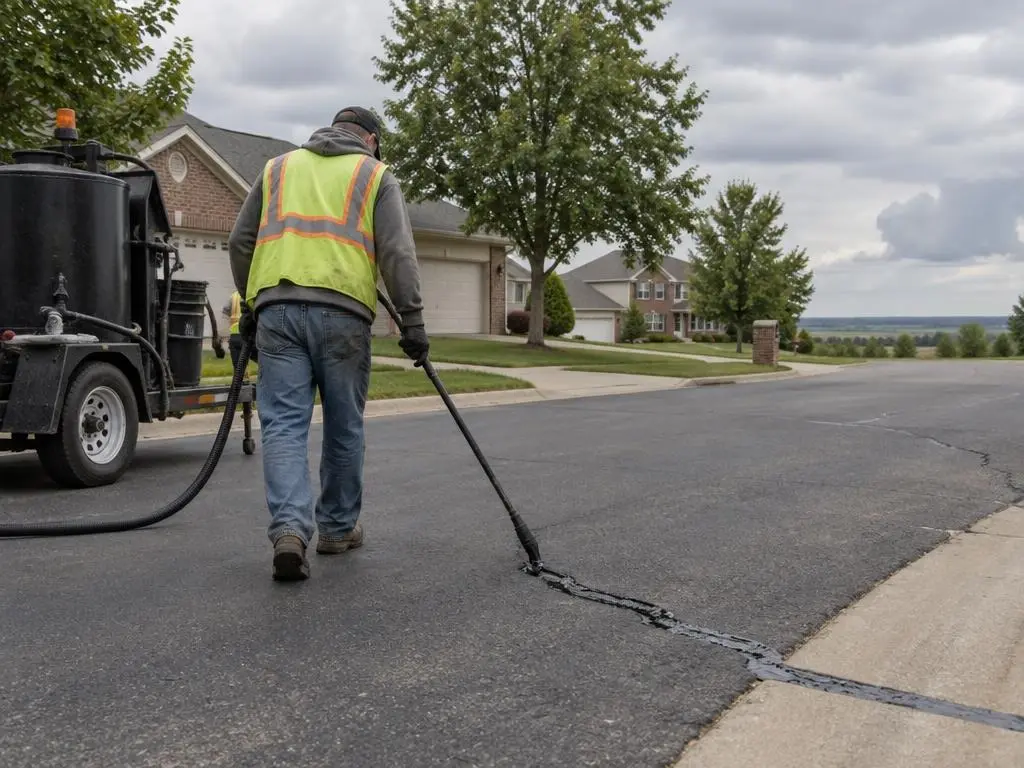
The terms are often used loosely. Crack filling usually means placing material in wider, more stable cracks that move little. Crack sealing usually means using a flexible, hot-applied rubberized sealant in cracks that open and close with temperature changes. Many jobs use both. Kansas pavement moves a lot between a January cold snap and a July heat wave, so flexibility matters.
How the work is done
- Cracks are blown out with compressed air to remove dirt, weeds and loose material
- Narrow working cracks can be routed to create a clean channel for sealant
- Hot sealant is applied into the crack and finished slightly over the surface
- Wide cracks may need backer material or a different repair
The sealant bonds only to clean, dry asphalt, so the cleaning step decides how long it lasts.
Which cracks can be sealed
Single cracks, longitudinal cracks along paving joints, and cracks along the edge of a garage slab or curb are good candidates. Alligator cracking, where cracks connect into small blocks, usually means the base has failed. Sealing those areas only slows the damage; they need patching. We separate the two when we look at your pavement.
Timing
SealMaster lists base failure, moisture intrusion and freeze-thaw cycles among the main causes of cracking and stresses sealing cracks while they are still small. The best window is late summer and fall, when cracks are open and dry before winter. Cool, dry days in spring work as well. Sealant should go into dry cracks, so we schedule after rain has had time to drain.
Crack sealing before sealcoating
If you are planning a sealcoat, cracks should be sealed first. Sealcoat is a thin coating and will not bridge a crack; it simply sinks in and the crack reappears. Sealing cracks first gives the sealcoat a continuous surface.
For parking lots
Commercial lots often have long joints between paving passes and cracks around inlets and curbs. Sealing them on a regular cycle is far less disruptive than patching failed areas later, and it can usually be done with only part of the lot closed at a time.
What This Covers
Crack sealing covers single cracks, joints and edges on driveways and lots.
Crack cleaning
Debris and weeds blown out so sealant bonds to clean asphalt.
Routing
Working cracks cut to a clean channel where needed.
Hot-applied sealant
Flexible rubberized sealant placed and finished at the surface.
Joint and edge sealing
Seams at slabs, curbs and paving joints sealed against water.
Typical Crack Sealing Costs
| Item | Published range |
|---|---|
| Crack sealing (SealMaster) | $0.35 to $1.00 per linear ft |
| Crack filling (HomeGuide) | $0.50 to $3.00 per linear ft |
| Crack filling (Angi) | $1 to $3 per linear ft |
| Full driveway crack filling (Angi) | $100 to $400 |
Published ranges from SealMaster, HomeGuide and Angi. The sources measure different scopes of work, which is why the ranges differ, and small jobs may carry a minimum charge. Crack width, cleaning, routing and sealant type move the total up or down. The figure on your written estimate is what you pay.
How It Works
1. Inspect
We identify which cracks can be sealed and which areas need patching.
2. Clean
Cracks blown out and routed where needed.
3. Seal
Hot rubberized sealant applied and finished at the surface.
4. Reopen
The sealant sets quickly and traffic returns soon after.
Crack Sealing Questions
How much does crack sealing cost?
Published figures run from about $0.35 to $1.00 per linear foot (SealMaster) up to $1 to $3 per linear foot (Angi), with Angi putting a typical driveway at $100 to $400. We measure the cracks and quote a written price.
When is the best time to seal cracks in Wichita?
Late summer and fall, on dry days, so cracks are sealed before the freeze season. Dry spring days also work.
Is crack sealing worth it?
SealMaster cites studies estimating that each dollar spent on crack sealing saves about $6 in later repairs. Even without exact figures, keeping water out of the base is the main way to avoid potholes.
Can you seal alligator cracks?
Sealing can slow them, but alligator cracking usually means the base has failed. Those areas generally need to be cut out and patched.
Crack Sealing Service Areas
- Paving Contractors in Wichita, KS
- Paving Contractors in Derby, KS
- Paving Contractors in Haysville, KS
- Paving Contractors in Mulvane, KS
- Paving Contractors in Park City, KS
- Paving Contractors in Bel Aire, KS
- Paving Contractors in Kechi, KS
- Paving Contractors in Valley Center, KS
- Paving Contractors in Maize, KS
- Paving Contractors in Goddard, KS
- Paving Contractors in Cheney, KS
- Paving Contractors in Clearwater, KS
- Paving Contractors in Andover, KS
- Paving Contractors in Augusta, KS
- Paving Contractors in Rose Hill, KS
- Paving Contractors in El Dorado, KS
- Paving Contractors in Newton, KS
- Paving Contractors in Hutchinson, KS
- Paving Contractors in McPherson, KS
- Paving Contractors in Wellington, KS
- Paving Contractors in Winfield, KS
- Paving Contractors in Sedgwick, KS
- Paving Contractors in Halstead, KS
- Paving Contractors in Colwich, KS
Get a Crack Sealing Estimate
Free estimates for crack sealing in Wichita and Sedgwick County.